

 Posted by
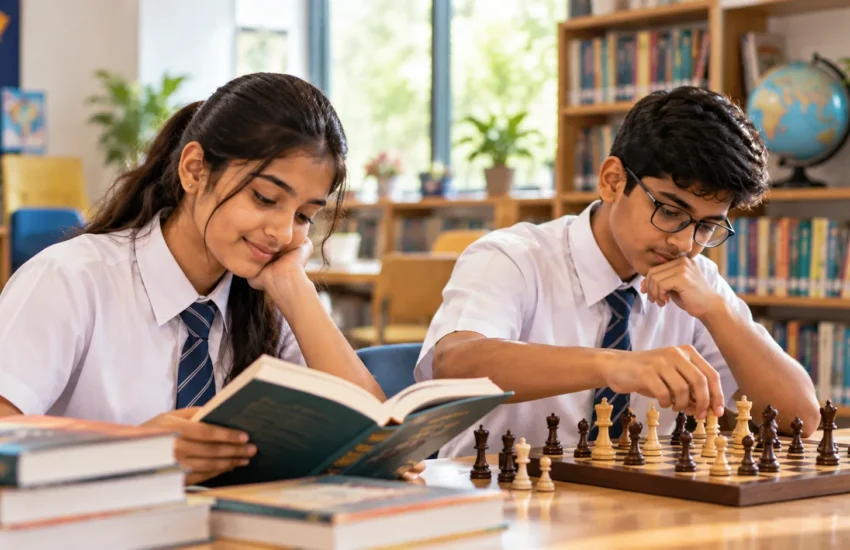
Every student learns, thinks, and expresses themselves differently.
While one student may excel in mathematics, another may shine in music, sports, art, or communication. These differences show that intelligence is not limited to test scores or academic performance.
The theory of Multiple Intelligences highlights different ways in which students can learn and demonstrate their abilities. Understanding these strengths can help teachers and parents create learning experiences that support each child’s unique potential. By recognizing and nurturing different types of intelligence, schools can encourage students to build confidence, explore their interests, and develop skills that support their overall growth.
In this comprehensive blog, we will delve deeply into the concept of multiple intelligences, explore the benefits of recognizing and nurturing these intelligences in education, and highlight the exceptional educational environment offered by St. Xavier’s High School.
Table of Contents:
- Introduction
- Understanding Multiple Intelligences
- Recognizing and Nurturing Strengths
- Holistic Development Through Multiple Intelligences
- Fostering a Supportive and Inclusive Learning Environment
- Conclusion
Introduction
In today’s educational landscape, the concept of intelligence has evolved beyond traditional notions of IQ and academic prowess.
Psychologist Howard Gardner’s theory of multiple intelligences has fundamentally transformed how we perceive intelligence. This theory asserts that there are various forms of intelligence, each representing a unique way individuals process information and excel in different areas. Gardner identified eight distinct intelligences, including linguistic, logical-mathematical, spatial, musical, bodily-kinesthetic, interpersonal, intrapersonal, and naturalist intelligences.
Recognizing the significance of this multifaceted view of intelligence, educational institutions like St. Xavier’s High School in Greater Noida West have taken an approach to embrace multiple intelligences. As one of the best schools in the region, St. Xavier’s understands that nurturing these intelligences is crucial for students’ development and success in a complex and interconnected world.
Understanding Multiple Intelligences
Howard Gardner’s theory of multiple intelligences has significantly broadened our understanding of human capabilities. Rather than a one-dimensional concept of intelligence, Gardner’s theory recognizes that each person possesses a unique blend of these intelligences in varying degrees.
Let’s briefly explore the eight intelligences:
- Linguistic Intelligence: This intelligence relates to language skills, including reading, writing, and verbal communication.
- Logical-Mathematical Intelligence: Individuals with this intelligence excel in logical reasoning, problem-solving, and mathematical concepts.
- Spatial Intelligence: Spatially intelligent individuals have a strong ability to perceive and manipulate visual and spatial information, making them skilled in activities like navigation, architecture, and design.
- Musical Intelligence: Musical intelligence involves a deep appreciation and understanding of music, including composition, rhythm, and the ability to play musical instruments.
- Bodily-Kinesthetic Intelligence: People with bodily-kinesthetic intelligence exhibit strong physical coordination, dexterity, and the ability to excel in activities requiring physical movement, such as sports and dance.
- Interpersonal Intelligence: Interpersonally intelligent individuals excel in understanding and interacting effectively with others, making them adept in leadership, teamwork, and social dynamics.
- Intrapersonal Intelligence: Intrapersonal intelligence pertains to self-awareness, emotional intelligence, and an understanding of one’s own motivations and inner life.
- Naturalist Intelligence: This intelligence involves a heightened sensitivity to and understanding of the natural world, including an ability to classify and relate to the environment.
Recognizing and Nurturing Diverse Strengths
The recognition and nurturing of multiple intelligences in education have far-reaching benefits for students. By recognizing that intelligence is not a one-size-fits-all concept, educators can create an inclusive learning environment where every student’s unique strengths and talents are celebrated and developed.
With this approach, St. Xavier’s High School, a renowned educational institution counted among the best schools in Greater Noida West, places the philosophy of multiple intelligences at the core of its educational approach.
As a result, the school is committed to fostering an atmosphere where students are encouraged to explore and excel in areas, regardless of their dominant intelligence.
For example, a student with linguistic intelligence may thrive in language and literature classes, while another with bodily-kinesthetic intelligence may excel in sports or performing arts. St. Xavier’s High School offers a wide array of extracurricular activities and academic options that cater to these diverse strengths.
This allows students to discover their passions and develop their abilities, promoting a sense of self-worth and accomplishment.
Holistic Development Through Multiple Intelligences
Embracing multiple intelligences in education goes beyond merely accommodating different strengths; it promotes holistic development. By nurturing diverse intelligences, students develop a well-rounded skill set and a strong sense of self, which are invaluable assets in their educational journey and future careers.
St. Xavier’s High School, as one of the top schools in Greater Noida West, integrates the principles of multiple intelligences into its curriculum. Furthermore, the school recognizes that an education focused solely on traditional academic subjects is not enough to prepare students for the challenges of the world. Therefore, it offers a broad range of opportunities for students to engage in activities that match their strengths and interests.
This holistic approach to education nurtures creativity, critical thinking, and adaptability. Students who have the chance to explore their passions and develop their intelligences are better prepared to thrive in an ever-changing world. They are not only academically proficient but also possess the confidence and skills to approach challenges with a diverse toolkit.
Fostering a Supportive and Inclusive Learning Environment
Creating an educational environment that effectively embraces multiple intelligences requires more than just acknowledging the theory; it necessitates the cultivation of a supportive and inclusive atmosphere.
Teachers at St. Xavier’s are trained to identify and nurture students’ strengths. They tailor their teaching methods to accommodate different intelligences, ensuring that all students have the opportunity to shine. Additionally, the school promotes peer learning and collaboration, allowing students to learn from each other’s strengths and develop a deeper appreciation for diversity.
Furthermore, St. Xavier’s High School incorporates project-based learning and experiential activities that tap into multiple intelligences. Students are encouraged to work on projects that leverage their strengths, fostering a sense of accomplishment and motivation.
This inclusive approach not only enhances academic outcomes but also fosters empathy and respect among students, creating a harmonious learning community.
Conclusion
Embracing multiple intelligences in education is a profound shift in how we perceive and support students’ abilities. By recognizing and nurturing diverse intelligences, St. Xavier’s High School prepares students for a future where success goes beyond traditional academic measures.
St. Xavier’s High School, celebrated as one of the best schools in Greater Noida West and counted among the top schools in the region, stands as a model institution that values and supports multiple intelligences.
By creating an inclusive learning environment, offering diverse extracurricular activities, and fostering a culture of respect and collaboration, the school empowers its students to embrace their individual strengths and become well-rounded, capable individuals.
In addition, these opportunities help students develop the skills they need to navigate different situations with confidence. This prepares them not only for academic success but also for a future where their diverse strengths will shine brightly and contribute to their personal and professional growth.